


Chief Justice Hails High Mediation Success Rate in Turks and Caicos Islands

Chief Justice Yonnette Cummings-Edwards has highlighted the progress of the Turks and Caicos Islands' court-connected mediation programme, revealing that dozens of disputes have been referred for mediation in recent years, with a number successfully settled without the need for a full trial.
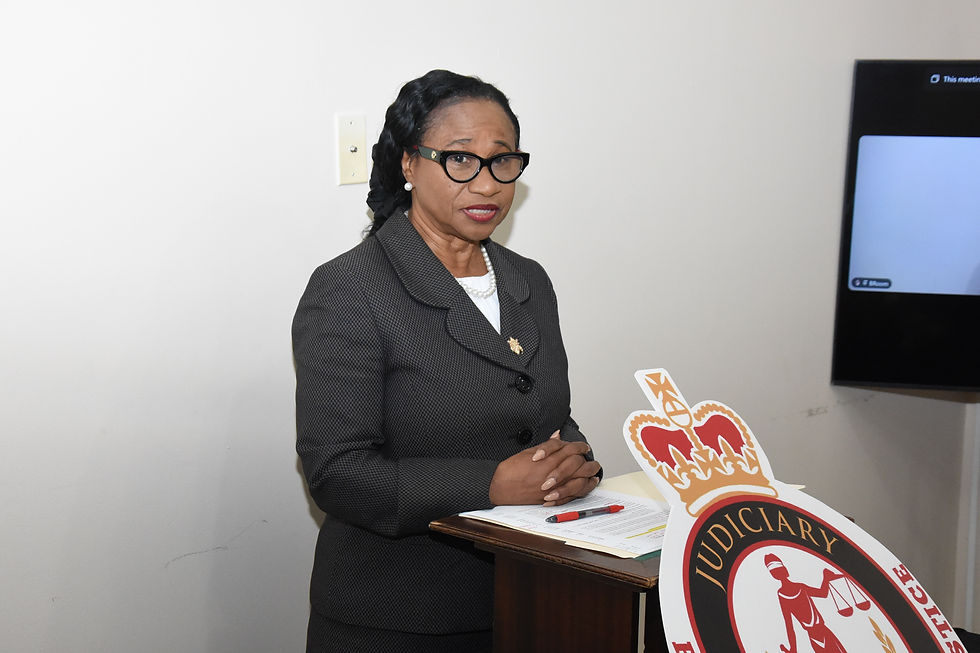
Speaking during Mediation Week 2026 celebrations held on Thursday, October 15, at Emily House, Leeward Highway, Providenciales, the Chief Justice presented statistics showing the programme's development since 2022, while encouraging attorneys and members of the public to make greater use of mediation as an alternative to traditional litigation.
The event was held under the theme, “Conversations That Heal, Resolutions That Last.”
According to the statistics presented, 32 matters were referred to mediation in 2022, with 18 successfully settled, representing a settlement rate of approximately 56.3 percent for that year's referrals.
In 2023, the number of referrals increased to 36, followed by a further rise to 42 in 2024.
The figures also showed that 27 new matters were referred to mediation in 2025, with nine recorded as settled, while others remained at various stages of the process.
Additionally, 22 of the 28 matters carried forward from 2024 were concluded during 2025, representing approximately 78.6 percent of those carried-forward matters.

Overall, the figures indicate that 137 matters were referred to mediation between 2022 and 2025, although the Chief Justice did not provide a complete breakdown of settlements across all four years.
The statistics, which were shared with the Chief Justice by Mediation Committee Chairman Justice Chris Selochan, were presented as evidence of the progress being made in promoting alternative dispute resolution within the Judiciary.
"These figures represent more than statistical achievements," Chief Justice Cummings-Edwards said.
She emphasized that behind every mediation referral is a real dispute involving individuals, families or businesses seeking a resolution to their differences.
"Where mediation succeeds, its benefits are felt, not merely in the court records, but in the lives of the parties themselves," she said.
The Chief Justice explained that mediation allows parties to resolve disagreements with the assistance of a neutral and impartial mediator, rather than having a judge determine the outcome following a contested trial.
Unlike traditional litigation, where a court delivers a binding judgment, mediation gives the disputing parties greater control over the terms of any agreement reached.
She identified several major advantages of mediation, including lower legal expenses, faster settlements, greater flexibility, confidentiality and the preservation of personal and professional relationships.
Chief Justice Cummings-Edwards noted that these benefits are particularly important in a small jurisdiction such as the Turks and Caicos Islands, where business, family and community relationships often continue long after a dispute has ended.
She also explained that successful mediation can reduce the number of matters requiring contested trials, allowing judicial officers to devote more time and resources to other cases.
"Every dispute successfully resolved is potentially one less matter requiring a contested trial and considerable judicial time and resources," she said.
However, the Chief Justice stressed that mediation should not be viewed merely as a tool for reducing court backlogs, but as a legitimate and effective means of delivering justice.
"A successful mediation, then, does not represent a failure to litigate. It represents a successful resolution of the dispute," she declared.
The Chief Justice pointed to the introduction of the Court-Connected Mediation Rules 2023 and provisions under Section 16 of the Supreme Court Act as important developments in strengthening the jurisdiction's alternative dispute resolution framework.
She said the Turks and Caicos Islands is keeping pace with other jurisdictions, including Jamaica, Trinidad and Tobago, Guyana and Singapore, where mediation has become an established part of the justice system.
During her address, she also paid tribute to the mediators who volunteer their time and professional expertise to help disputing parties reach agreements.
She acknowledged that many mediators undertake these responsibilities alongside demanding careers, family commitments and other personal obligations.
The Chief Justice also issued a direct appeal to attorneys who have not yet fully embraced mediation, urging them to recognize its value in serving their clients' best interests.

"Please come on board," she urged.
She reminded lawyers that their professional responsibilities extend beyond pursuing litigation and include advising clients on the most appropriate and effective means of resolving disputes.
Members of the public were similarly encouraged to consider mediation whenever appropriate, rather than viewing compromise as a sign of weakness or defeat.
The Chief Justice expressed hope that continued public education and the work of the Judiciary's Mediation Committee would help establish a stronger culture of dialogue, compromise and peaceful dispute resolution throughout the Turks and Caicos Islands.
The figures presented demonstrate the Judiciary's continued efforts to expand mediation, while underscoring the potential for more disputes to be resolved without the expense, delays and adversarial nature of traditional courtroom proceedings.


Comments