


Brianna Walcott Represents TCI at UN ECOSOC Youth Forum

Youth leader Brianna Walcott concluded her engagement at the ECOSOC Youth Forum, held April 14–16, 2026 at the United Nations Headquarters in New York. Representing the Turks and Caicos Islands as part of a Caribbean youth delegation, she delivered a strong call for more equitable, coordinated, and action-driven partnerships.

Convened under the theme “Transformative, equitable, innovative and coordinated actions for the 2030 Agenda and its SDGs for a sustainable future for all,” the Forum brought together youth leaders, Member States, and global partners to accelerate progress on the United Nations Sustainable Development Goals, with particular emphasis on Goals 6, 7, 9, 11, and 17.
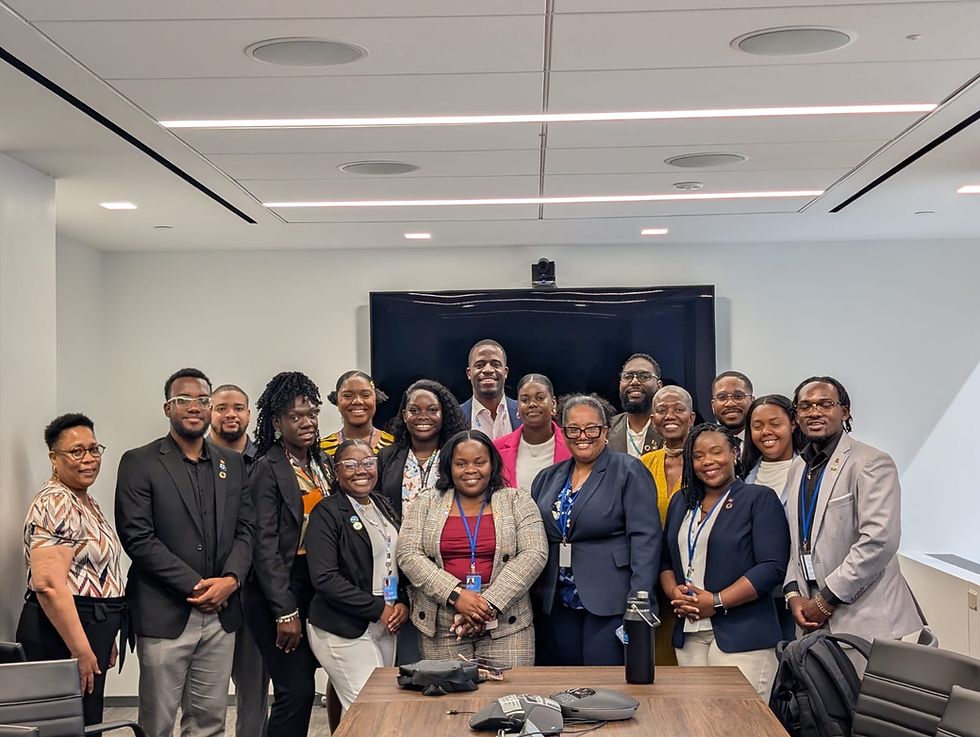
Walcott joined representatives from across the Caribbean, including The Bahamas, Antigua and Barbuda, Saint Kitts and Nevis, Grenada, Barbados, Jamaica, and Guyana, collectively amplifying a unified regional voice on the priorities and realities of Small Island Developing States (SIDS).
During the Caribbean Regional Breakout Session on SDG 17: Partnerships for the Goals, she delivered a clear and urgent message on the role of collaboration in SIDS development.“For Small Island Developing States, partnerships are not a policy choice; they are the difference between vulnerability and resilience, and between stagnation and sustainable progress,” she stated, grounding global development discourse in the lived realities of Caribbean communities.
Her contribution was informed by both lived experience and sustained engagement in youth development. Walcott serves as Immediate Past President of the Rotaract Club of Providenciales, is a member of the Caribbean Philanthropic Alliance, and is currently pursuing a Bachelor of Science in Youth Development Work at the University of the West Indies. Over the past five years, her leadership has focused on strengthening cross-sector partnerships with government agencies, civil society, and community stakeholders to advance initiatives in literacy, environmental sustainability, youth empowerment, and community resilience.
Through this work, she has emphasized that impact depends on moving beyond formal partnerships toward shared design, implementation, and accountability, while addressing persistent barriers such as unequal power dynamics, fragmented approaches, and weak accountability systems.
She also pointed to regional examples such as the Juvenile Prevention and Intervention Council (Turks and Caicos) and HANWASH as demonstrations of how structured, inclusive collaboration can transform fragmented efforts into lasting, systems-based impact.
Following the Forum, Walcott reinforced the urgency of translating dialogue into implementation.“Too often, youth are engaged at the level of consultation without being included in decision-making,” she said. “Meaningful partnership requires shared power, shared responsibility, and shared accountability. Action must go beyond conversation.”
Reflecting on the experience, she described it as both grounding and affirming in her work in youth development and advocacy. She expressed pride in representing the Turks and Caicos Islands on a global platform and gratitude for the opportunity to contribute to critical discussions.
She further highlighted the challenge of siloed approaches, despite the inherently interconnected nature of the Sustainable Development Goals. For Small Island Developing States such as the Turks and Caicos Islands, she noted that limited resources and shared vulnerabilities make coordination not optional, but essential.
She stressed that progress depends on shifting away from fragmented efforts toward deeper, more intentional collaboration. For small nations, collective action remains critical to addressing development challenges and building long-term resilience.
She also called for a deliberate shift toward co-creation, positioning young people as equal partners in shaping policy, budgeting, and national development planning, supported by structured investment and formal pathways for participation in governance.
While in New York, the Caribbean delegation also engaged in a high-level dialogue with Ambassador Leslie Wade, CARICOM Permanent Observer to the United Nations.
Ambassador Wade commended the delegation’s contributions and encouraged the young leaders to remain strategic and steadfast advocates for Small Island Developing States, underscoring the importance of sustained Caribbean representation in global decision-making spaces.
Walcott’s involvement marks an important milestone, representing the second time the Turks and Caicos Islands has participated in the ECOSOC Youth Forum. This continued engagement reflects the country’s growing visibility in international development spaces and reinforces its commitment to youth leadership and its expanding role in global sustainable development discourse.
Her involvement was supported by FLOW TCI, whose investment demonstrates a strong commitment to youth empowerment, leadership development, and the elevation of Caribbean voices within international development arenas.
As the international community advances toward the 2030 Agenda, Walcott’s message remains clear: partnerships must translate into measurable action, and youth must be positioned not at the margins, but at the center of designing and delivering the future.


Comments